DrSharpe Health
DrSharpe Health
DrSharpe Health
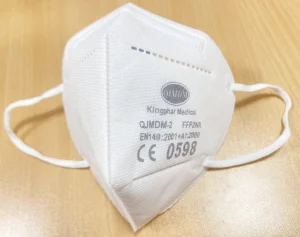
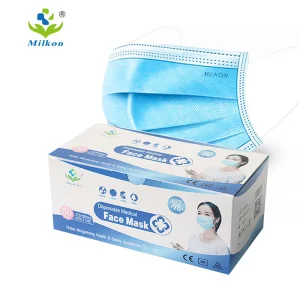
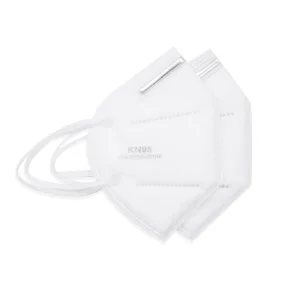
Explore our top-tier selection of CE-certified medical and civilian face masks engineered for diverse protective applications.
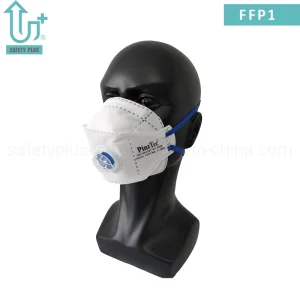
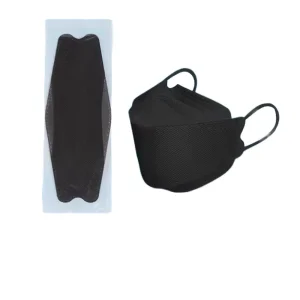
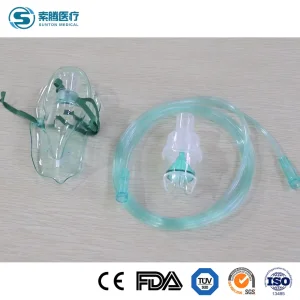
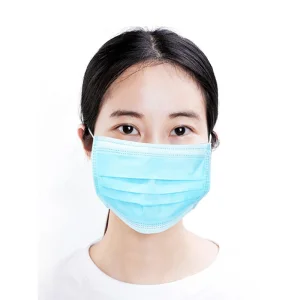
Understanding international standards, PPE directives, and regulatory criteria for personal and clinical respiratory protection.
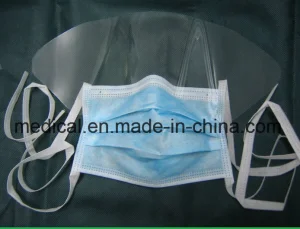
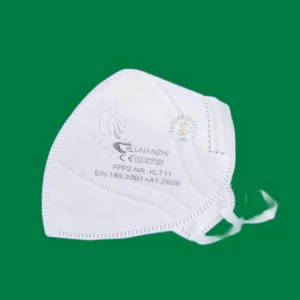
For any respiratory safety device sold in the European Economic Area (EEA), the CE Certificate (Conformité Européenne) acts as a mandatory passport. However, not all CE marks carry the same operational gravity. In the sphere of protective masks, regulations diverge into two distinct streams:
Understanding the distinction between these regulatory frameworks is vital for global B2B procurement. Failing to match the correct standard with the designated workplace application risks non-compliance, legal liability, and safety failures.
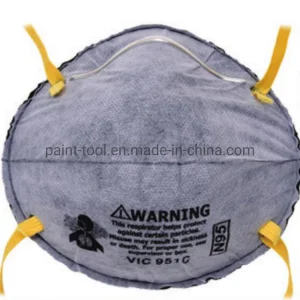
Beyond the European Union, dynamic trade parameters dictate distinct national testing procedures. In the United States, the Food and Drug Administration (FDA) regulates surgical masks via 510(k) clearances, referencing ASTM F2100 metrics. For particulate protection, NIOSH certifies N95 respirators.
During periods of acute supply chain constraints, Emergency Use Authorizations (EUAs) allow for the integration of equivalent international standards. Crucially, the Chinese GB 2626 standard (KN95) and the South Korean MFDS standard (KF94) rely on comparable sodium chloride (NaCl) aerosol filtration tests.
Industrial face mask suppliers must align their engineering pathways with these protocols to ensure cross-border product viability. By maintaining testing portfolios that span EN 149, GB 2626, and ASTM F2100, manufacturing centers can fluidly pivot to satisfy changing municipal market requirements.
Inside the production architecture of Zhejiang DrSharpe Health Co., Ltd.: Materials, efficiency, and automated testing.
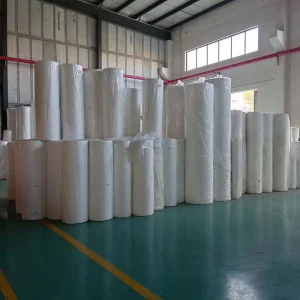
The functional core of any CE certified face mask is its melt-blown non-woven layer. Produced via high-velocity hot air attenuation of molten polypropylene polymer, this method generates ultra-fine fibers with diameters between 1 and 5 micrometers. These randomly oriented webs form a complex labyrinth that intercepts airborne particulates.
To achieve high filtration efficiency (≥99% BFE/PFE) without obstructing breathing, we subject the melt-blown media to corona discharge treatment. This process infuses the fibers with semi-permanent electric charges, called electrets. Electret technology uses electrostatic attraction to capture sub-micron particles, maintaining low air resistance (pressure drop) for the wearer.
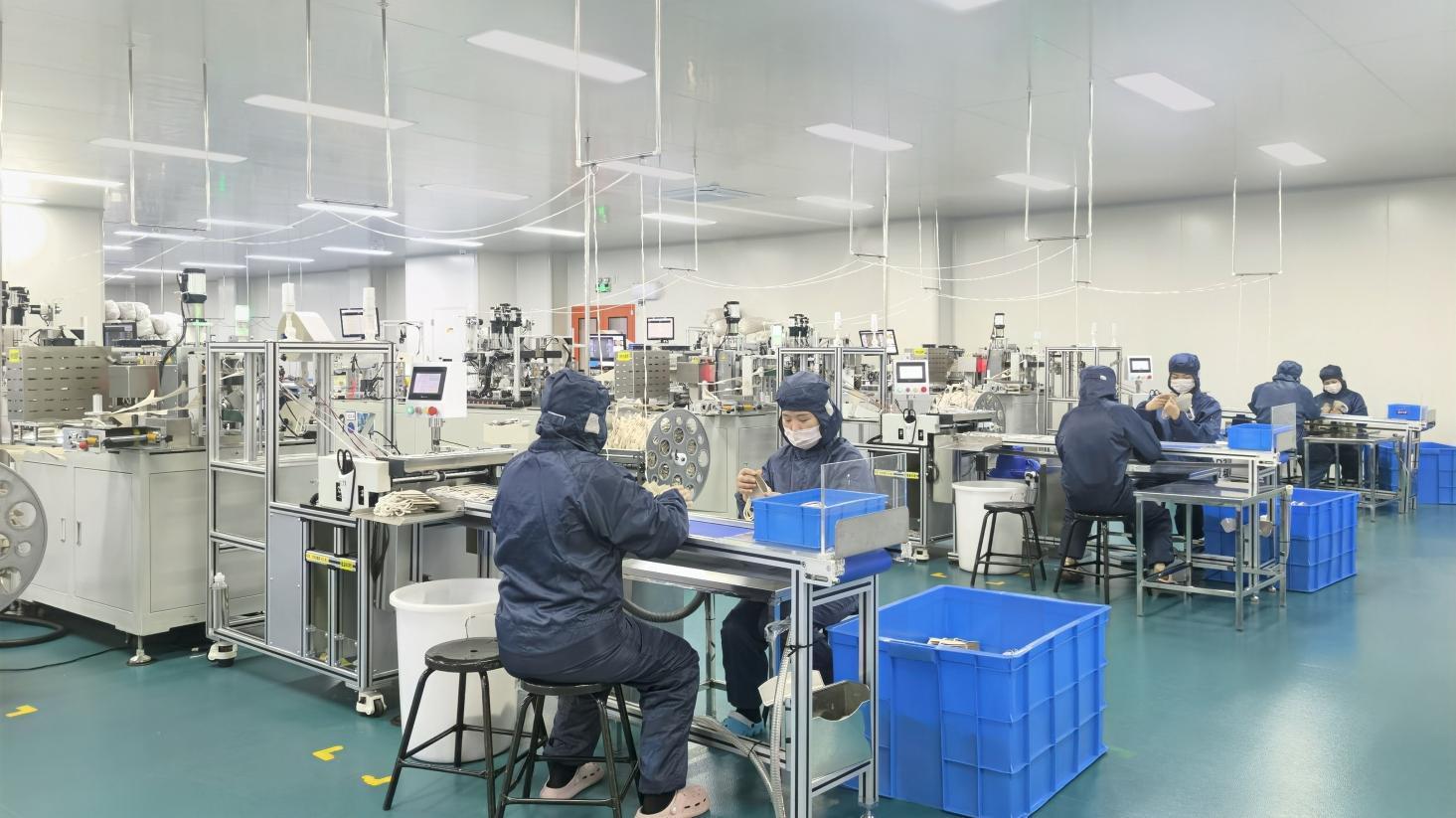
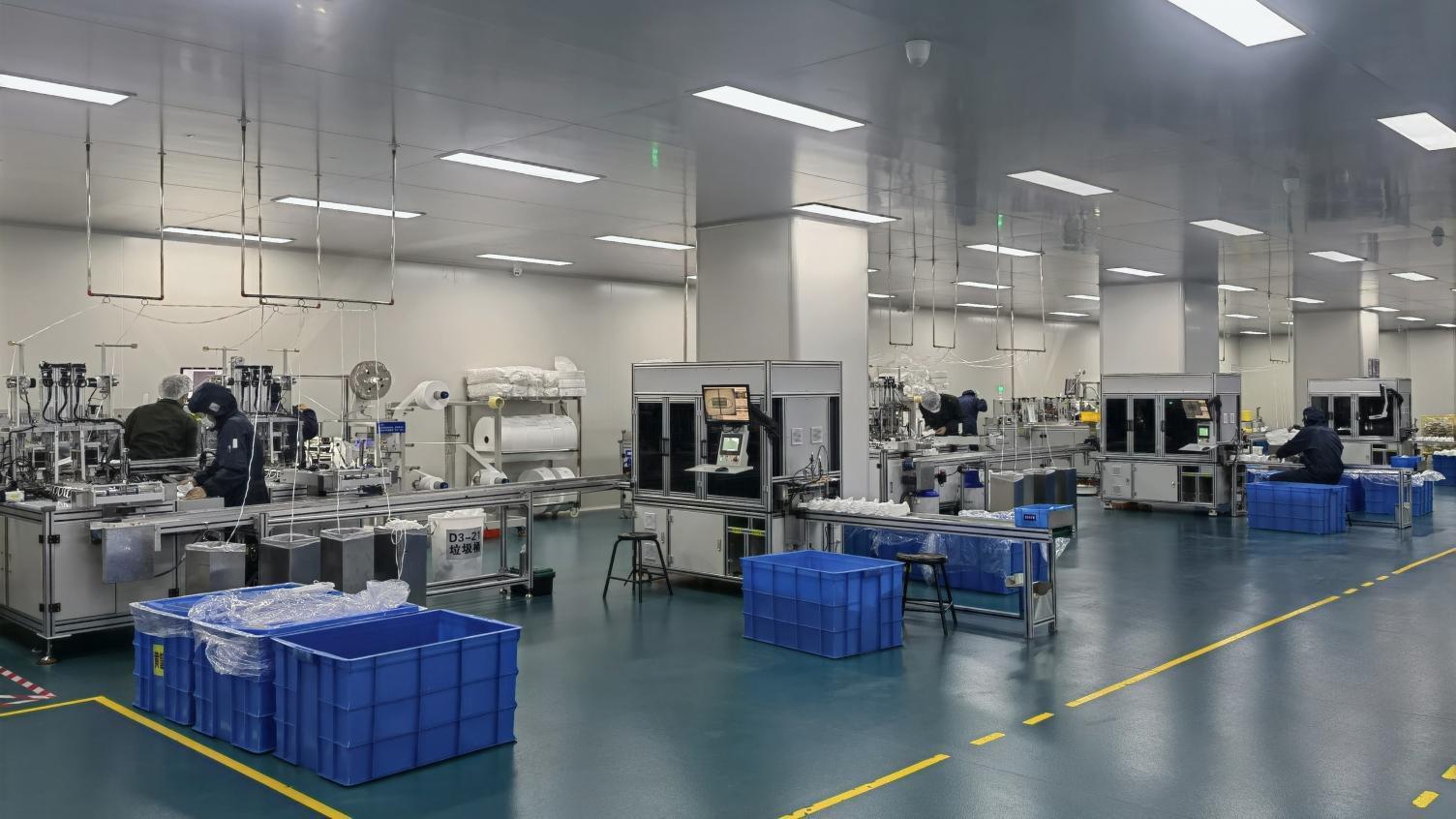
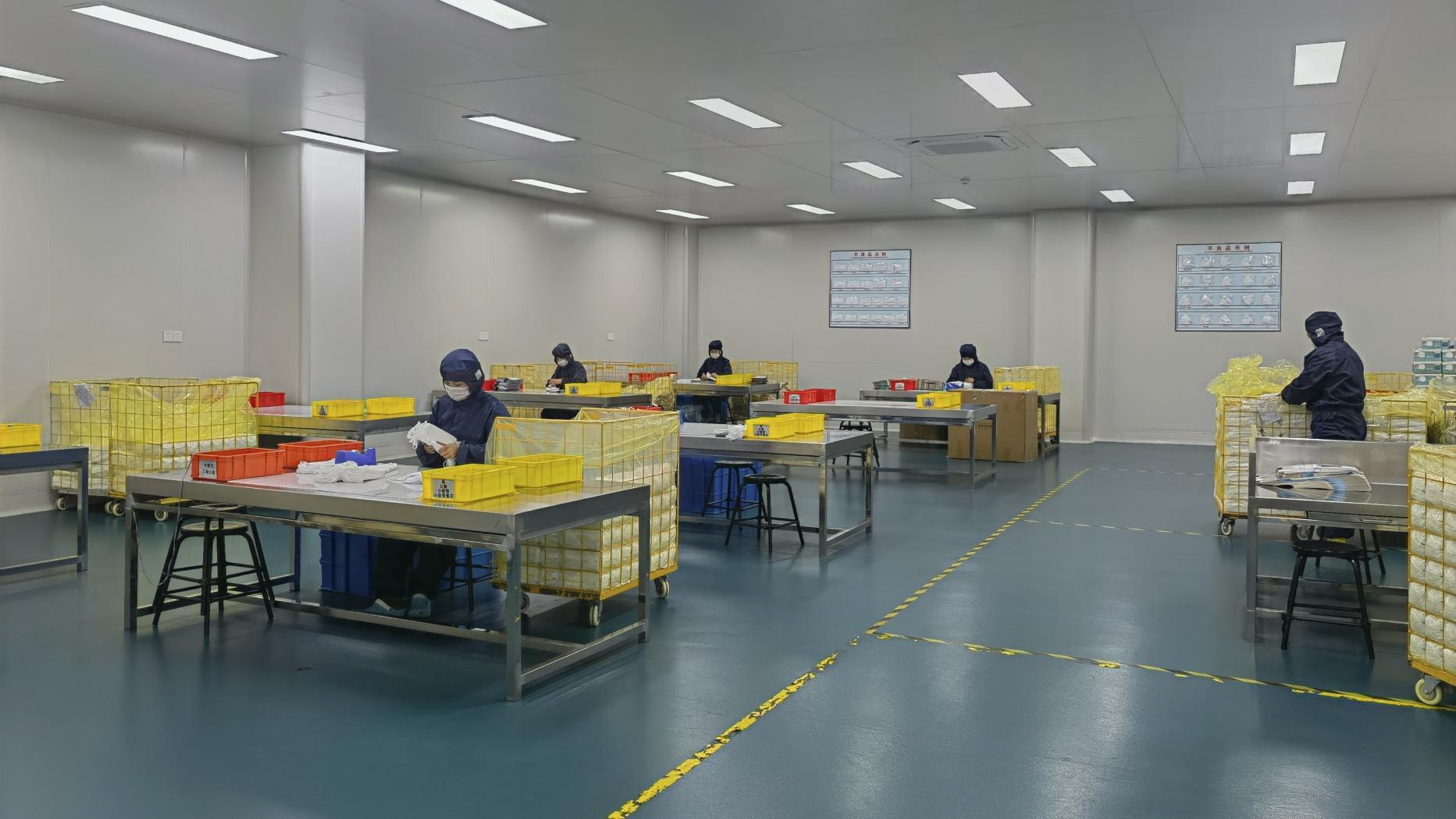
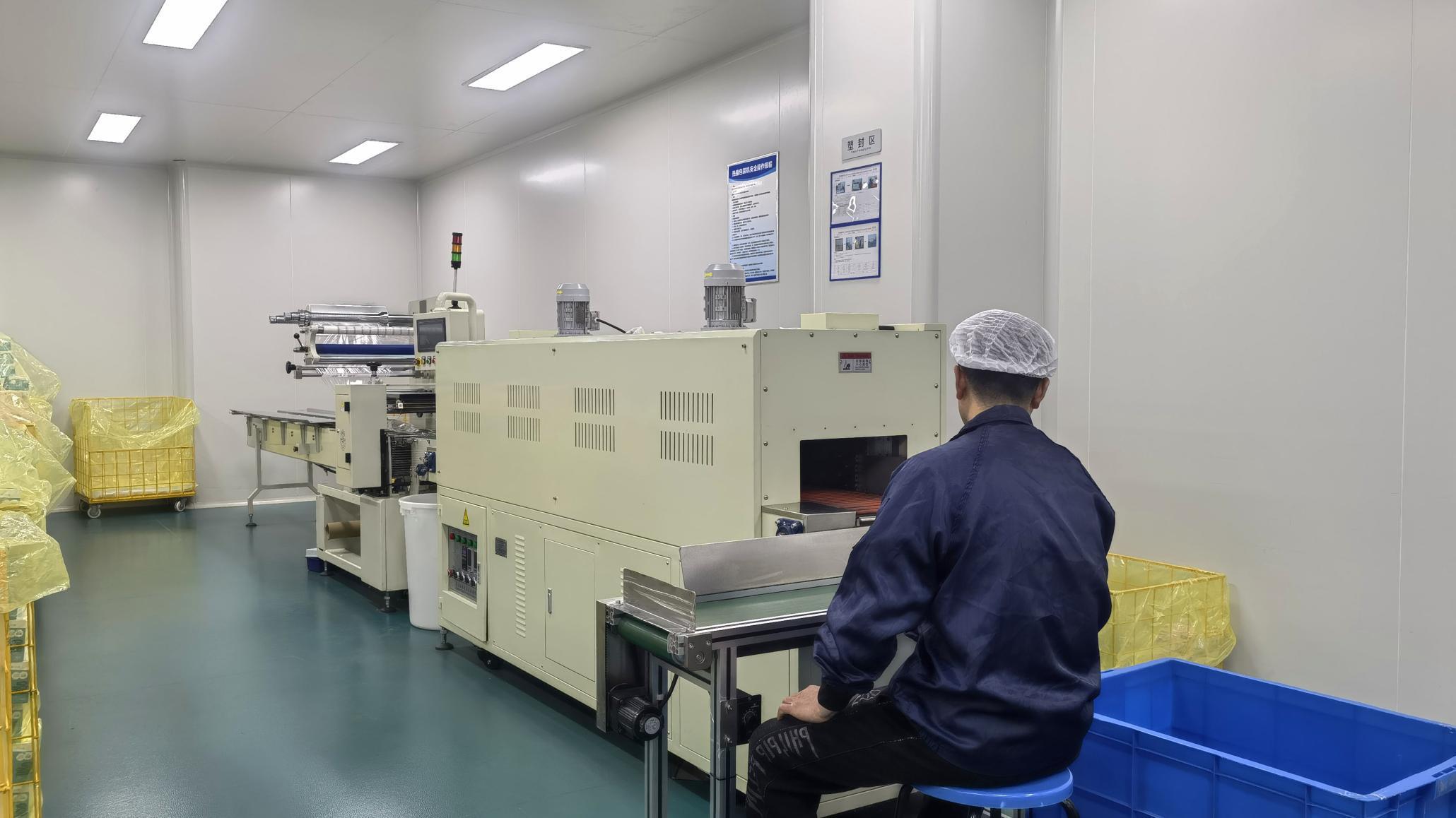
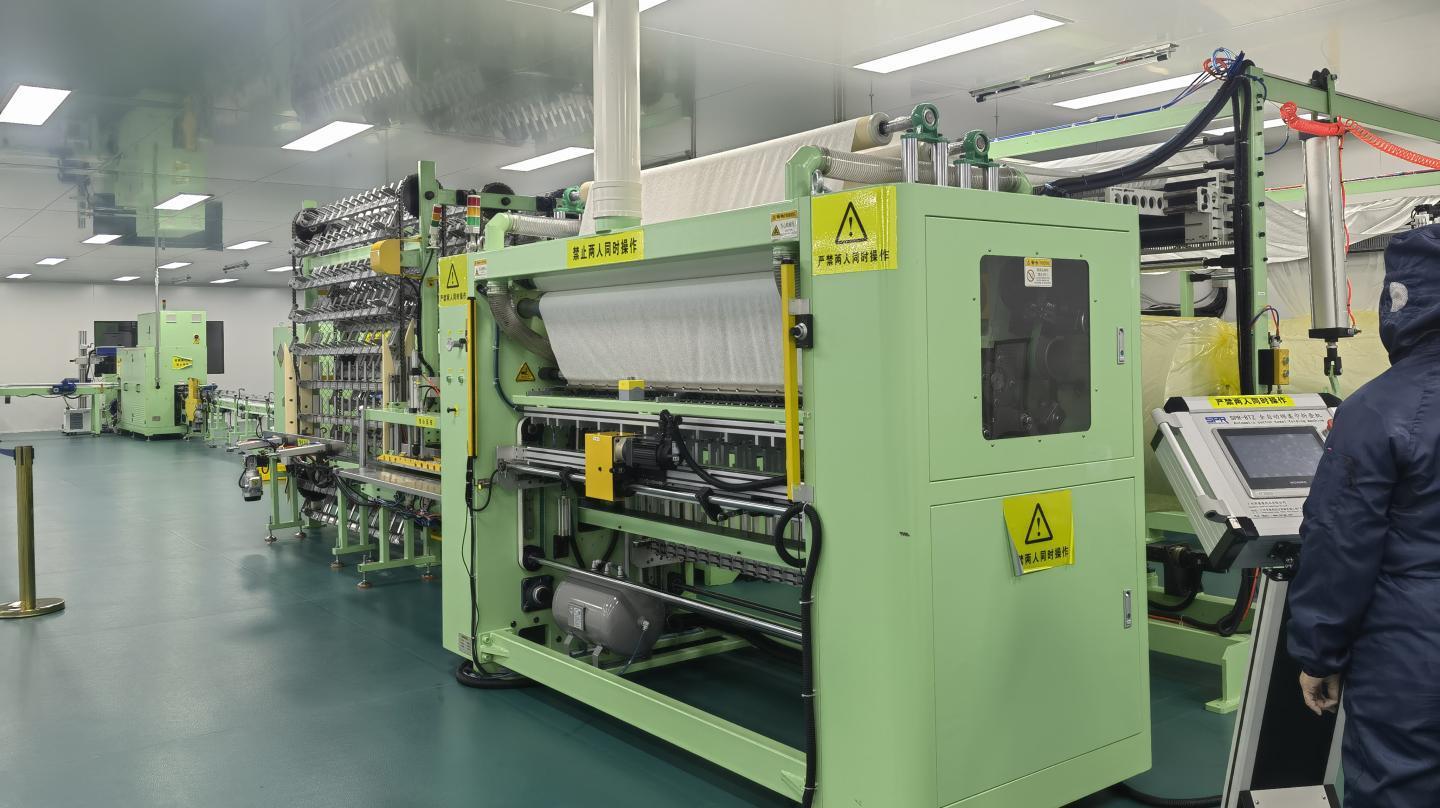
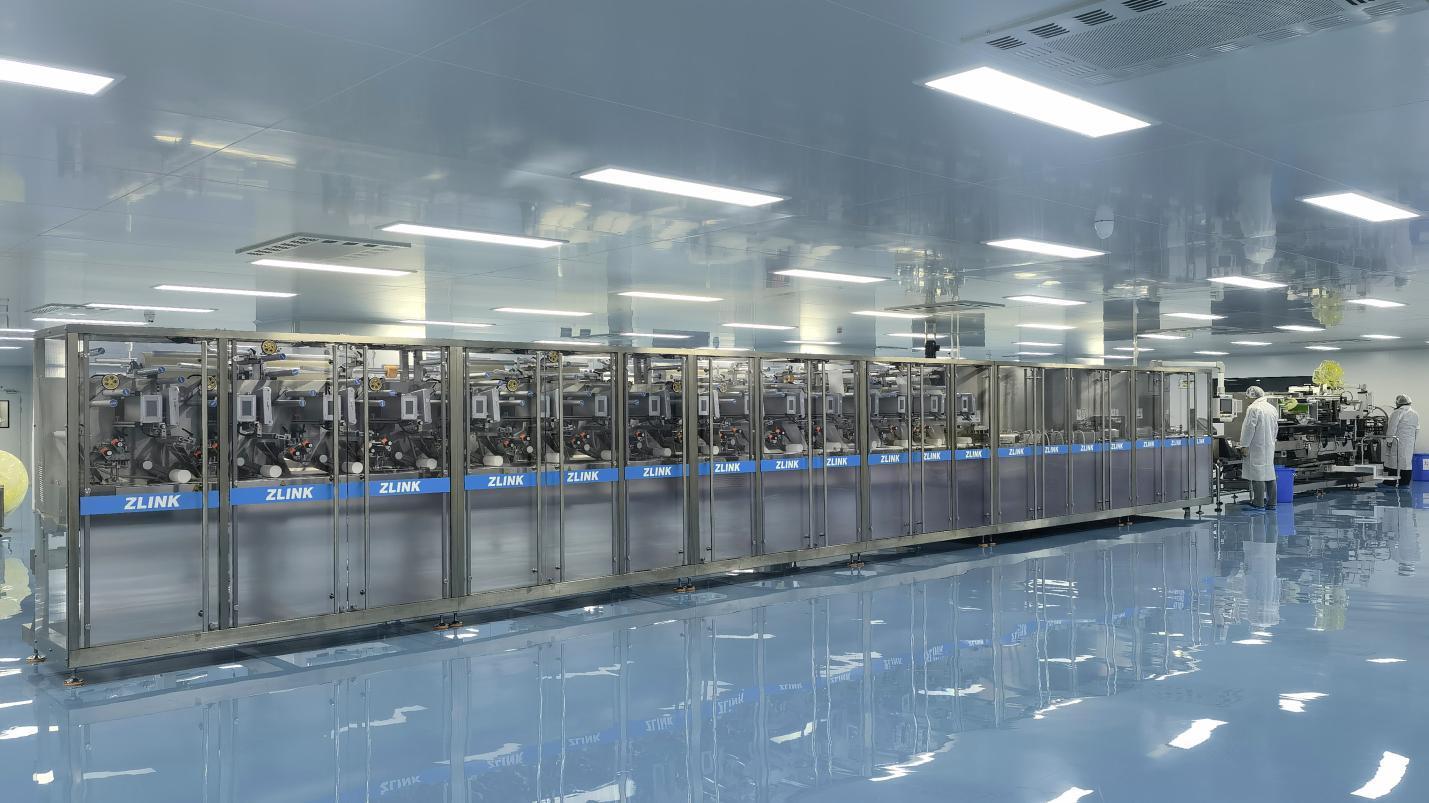
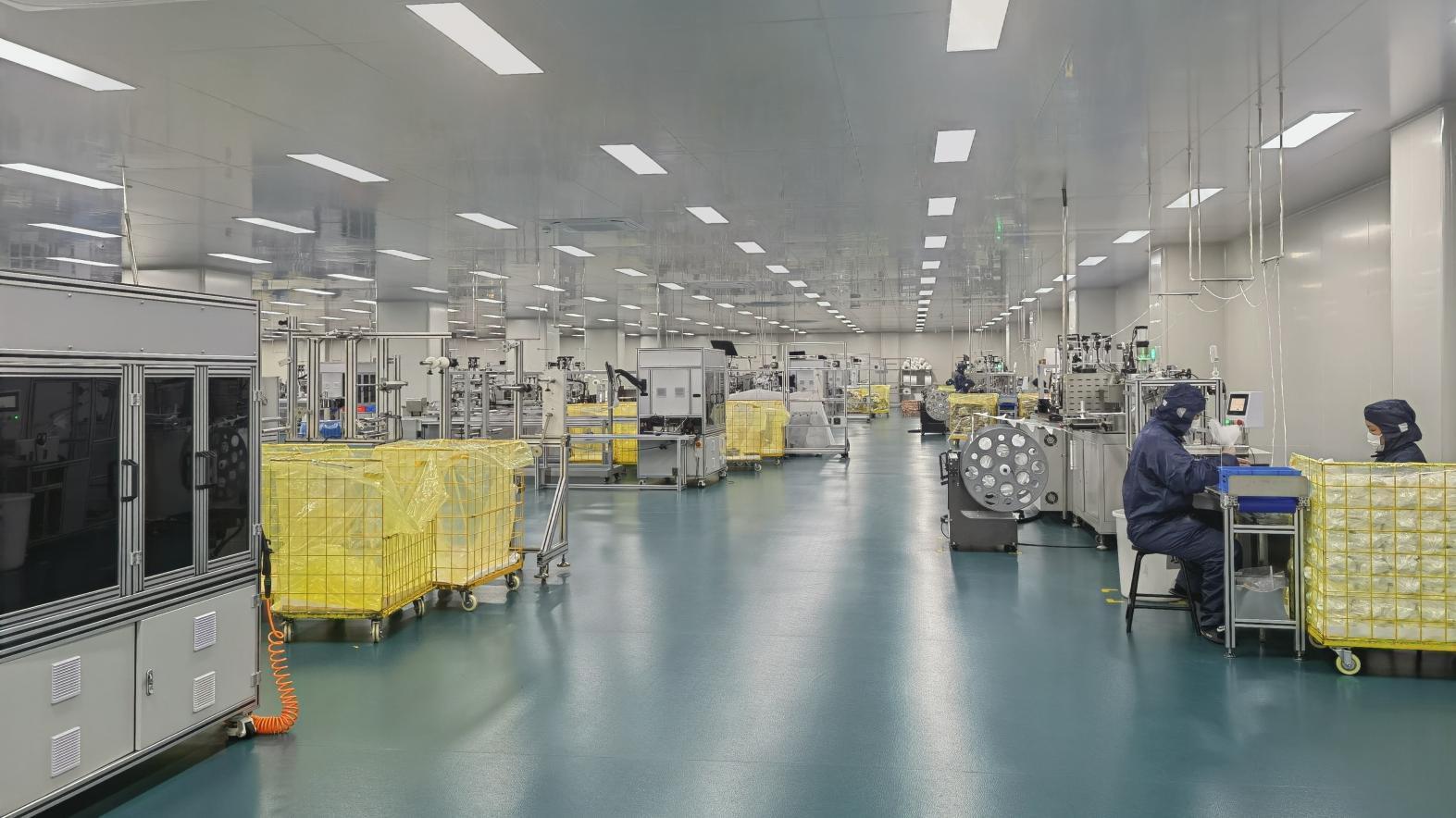
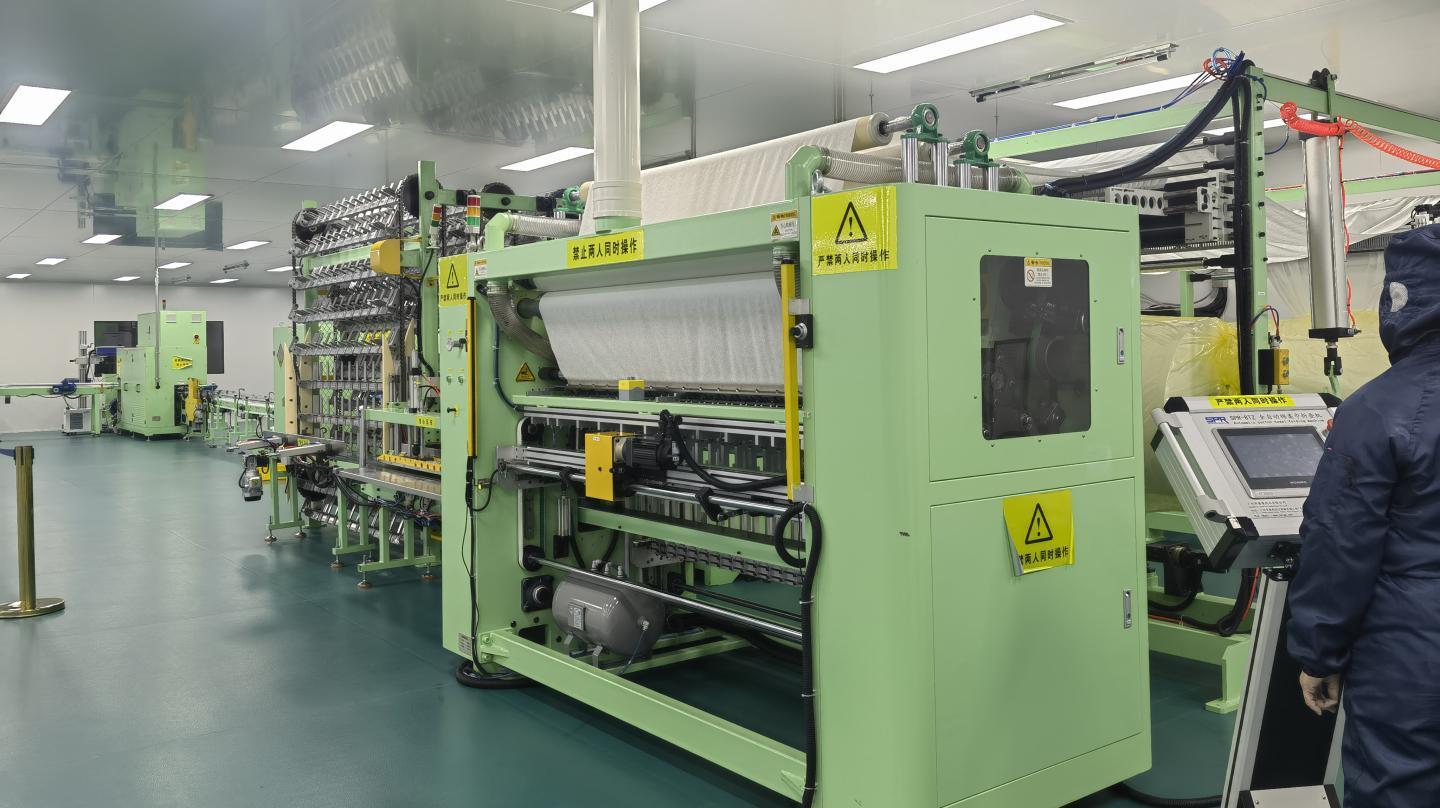
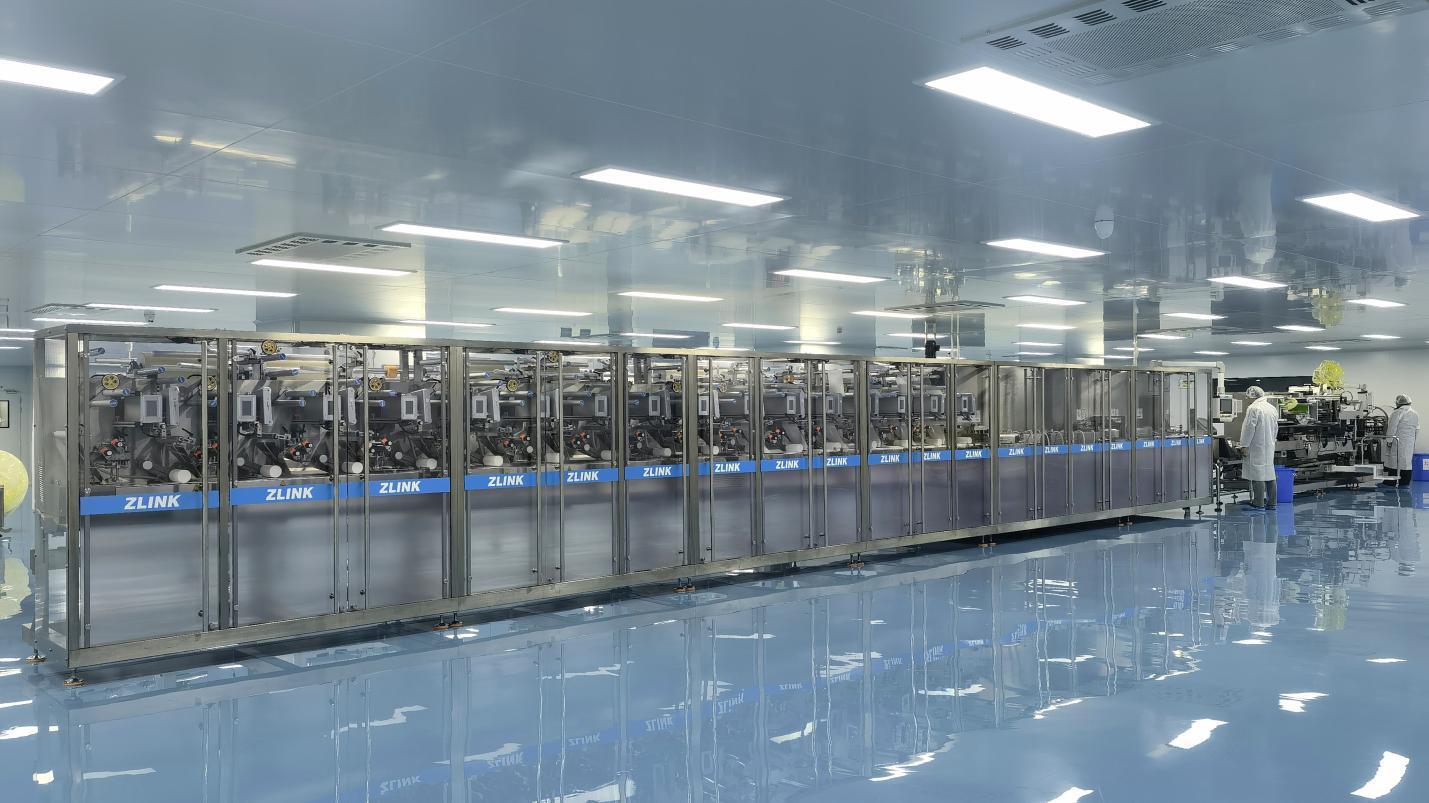
Zhejiang DrSharpe Health Co., Ltd. operates a high-capacity production facility designed to meet international standards. Our manufacturing lines run around the clock under cleanroom conditions to prevent contamination during assembly.
Our facility houses 5 fully automatic mask production lines and 12 semi-automatic production lines. Automated manufacturing minimizes human handling, stabilizing output quality across large production runs. We manage every step, from feeding raw spunbond and melt-blown polypropylene to automated ultrasonic earloop welding and nose-clip insertion.
This industrial setup is backed by a testing protocol. Every material batch undergoes quality testing for:
Aligning face mask production with industrial applications and future environmental standards.
Respiratory protection is needed across a wide range of industries, each with its own technical requirements:
The disposable mask industry is evolving toward sustainability and smart technology. Future designs must reduce environmental impact while maintaining high safety standards.
Biodegradable Materials: We are researching polylactic acid (PLA) and bio-based polymers to replace standard polypropylene, aiming to shorten environmental decomposition cycles from centuries to months.
Nanofiber Membranes: By using electrospun nanofibers, we can achieve high mechanical filtration that relies less on electrostatic charge. This helps maintain filtration performance in humid conditions.
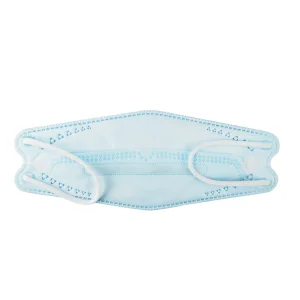
Ergonomic & Low-Resistance Profiles: Using 3D structures like KF94 and folding KN95 layouts helps maximize filter surface area. This lowers breathing resistance while ensuring a secure fit that minimizes leak points.
Take a virtual tour of our state-of-the-art facilities, automatic manufacturing lines, and quality verification processes.
Answering regulatory, logistics, and technical questions for procurement managers and distributors.
Discover our comprehensive range of specialized medical and industrial respiratory protection solutions.