DrSharpe Health
How to dispose of used disposable masks safely starts with a small habit: handle the mask by its ear loops, not its front. After removing it, place it directly into a rubbish bin, preferably one with a liner. Do not leave it on a kitchen counter, in a car cup holder, or beside a public bin. These simple steps reduce unnecessary contact with a used mask. Then wash your hands with soap and water, or use hand sanitizer when washing is unavailable. Easy to forget.
Infection-prevention epidemiologist Dr. Saskia Popescu has emphasized practical, repeatable precautions in public health. A concise paraphrase of that approach is: “Make safe handling a routine, not an afterthought.” This is a paraphrase, not a verbatim quotation. Disposable masks generally do not belong in household recycling, because their mixed materials and possible contamination can complicate handling. Follow local waste instructions if they provide specific advice. A mask may look clean after a short trip, but appearance is not a reliable reason to reuse or leave it loose. If the mask is damp, torn, or visibly soiled, dispose of it promptly and avoid touching its inner surface. These steps are modest, and they are not a substitute for current public-health guidance. They do make the next action clear: remove, contain, and clean your hands. A bin nearby helps.
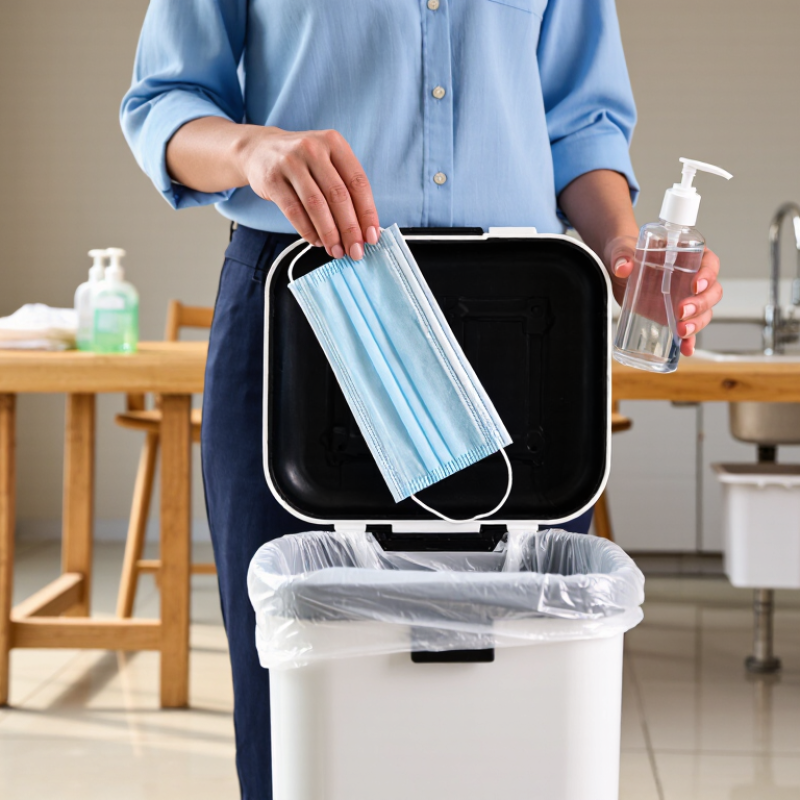
Before removing a used disposable mask, set up a small disposal area. Choose a spot away from food, clean dishes, children, and pets. Keep a lined, lidded bin within easy reach, plus soap and running water or hand sanitizer. A sturdy waste bag helps contain loose masks. Keep it simple. Special equipment is usually unnecessary for routine household disposal.
Preparation matters because masks can carry germs on their outer surface. The World Health Organization’s 2022 report, Global analysis of health care waste in the context of COVID-19, estimated that 87,000 tonnes of personal protective equipment were shipped through its emergency initiative from March 2020 to November 2021; much was expected to become waste. This figure covers protective equipment broadly, not masks alone, but it shows why waste handling deserves attention. Leave the bin open only while placing the mask inside, then close its lid. I sometimes find that the nearest bin is inconveniently far away; moving one closer before taking off the mask can prevent a careless trip through the room. Avoid placing the mask on a counter while gathering supplies. After disposal, wash or sanitize your hands.
When removing a used disposable mask, touch only its ear loops or ties. Keep the front away from your face and clothing. The outer surface may have collected droplets during wear, even when it looks clean. Lift the loops off gently; do not pull the mask down by its front panel. WHO guidance recommends handling masks by their straps and cleaning hands after removal.
A small movement matters. Hold the mask away from your body, then place it directly into a closed waste bin. Avoid setting it on a desk or stuffing it into a pocket for later. WHO’s 2022 report estimated that about 87,000 tonnes of personal protective equipment were shipped through its emergency supply initiative between March 2020 and November 2021, with most expected to become waste. That figure covers multiple types of equipment, not masks alone, but it shows why careful disposal matters.
Tips: Remove one loop at a time. Don’t touch the mask’s front. Wash or sanitize your hands afterward, especially before eating. If a tie catches, pause and free it carefully; rushing can bring your fingers across the mask’s surface.
Remove the mask by its ear loops or ties, then dispose of it safely.
How to read this chart: The bars show the recommended step order, not measured quantities. Avoid touching the front of the mask, place it in a waste bin, and clean your hands afterward. Follow local waste-disposal guidance.
How to Dispose of Used Disposable Masks Safely?
Contain the Used Mask in a Sealed Bag
After removing a disposable mask, hold it by the ear loops and avoid touching its front. Put it directly into a small plastic bag, such as a clean produce bag, then tie or seal it securely. This helps contain dust, moisture, and anything caught on the mask. Keep it away from food and clean surfaces while you handle it. Small steps matter.
If the mask is damp or visibly soiled, use a second bag for extra containment. Do not squeeze the mask to make it fit; that can spread residue onto your hands or nearby surfaces. Place the sealed bag in your household rubbish, following your local waste service’s instructions. Disposable masks generally do not belong in ordinary recycling bins. Guidance can differ, so check local advice when uncertain. It is easy to rush this step, especially near a bin, but securing the bag takes only a moment.
Tips: Keep a few spare bags near the place where masks are removed. Wash your hands with soap and water afterward, or use hand sanitizer if washing is not available. If the bag leaks, clean the affected surface and seal the waste in another bag. I might forget the spare bag sometimes; storing one by the door makes that less likely.
Place the Bag in an Appropriate Waste Bin
After removing a disposable mask, hold it by the ear loops. Avoid touching the front, which may have collected droplets or dirt. Put the mask directly into a small bag, such as a lined household waste bag. If it is damp or visibly soiled, bagging it helps keep waste contained. Tie the bag closed before carrying it.
Choose a bin intended for general waste, unless local health guidance gives different instructions. Do not put used masks in recycling; their mixed materials and elastic loops can interfere with sorting. Keep the closed bag inside the bin, not beside it, where wind or animals might scatter its contents. A bin with a lid is useful, especially in shared kitchens or outdoor areas.
It is easy to rush this step. I used to think tying the bag was enough, but the bin matters too. Check that the lid closes and that the bag is not overfilled. If it is, use another suitable bag rather than forcing it down. Wash your hands with soap and water after handling the mask and waste. A small routine, done carefully, reduces mess and unnecessary contact.
How to Dispose of Used Disposable Masks Safely?
A used disposable mask can carry germs on its outer surface, so handle it by the ear loops or ties. Avoid touching the front, even if it looks clean. Not the front. Place the mask directly into a lined rubbish bin, then secure the bag if it is nearly full. Do not put the mask in a recycling bin or flush it down a toilet. If you need to adjust the mask before removing it, pause and keep your hands away from your face. It is easy to rush this part.
Clean your hands immediately after disposal. Wash with soap and running water for at least 20 seconds, rubbing your palms, fingertips, thumbs, and the spaces between your fingers. Take your time. If soap and water are not available, use hand sanitizer containing at least 60 percent alcohol, and rub until your hands feel dry. Use soap and water when your hands are visibly dirty. A small bottle near the bin can help, but it is not a replacement for washing when a sink is available. I sometimes find that the disposal step feels finished before the handwashing is done. That pause matters. The mask is gone, but your hands still need attention.
Choose a spot away from food, clean dishes, children, and pets. Place a lined, lidded bin nearby. Keep it simple.
Hold the ear loops or ties. Avoid touching the front, even when it looks clean.
No. Place it directly into the lined bin. A brief pause to find the bin is better than setting it down.
No. Put used masks in household rubbish, not recycling. Never flush one down a toilet.
Close the lid after placing the mask inside. If the waste bag is nearly full, secure it.
Wash with soap and running water for at least 20 seconds. Rub your palms, fingertips, thumbs, and between your fingers. Take your time.
Use hand sanitizer containing at least 60 percent alcohol. Rub until your hands feel dry. Use soap and water when available, especially if your hands look dirty.
Usually not for routine household disposal. A lined bin, soap or sanitizer, and a nearby waste bag are enough. I sometimes forget to move the bin closer. That small detail matters.
How to dispose of used disposable masks safely begins with preparing a suitable disposal area and gathering a small bag and waste bin. Avoid touching the mask’s front, which may have collected droplets or dirt. Instead, remove it by holding its ear loops or untie its straps, keeping the material away from your face and clothing.
Place the used mask in a bag and seal it securely to help contain it. Put the sealed bag in an appropriate waste bin, rather than leaving the mask loose where someone else might handle it. Once you have finished, clean your hands thoroughly with soap and water or hand sanitizer. Following these simple steps helps limit contact with a used mask and keeps disposal tidy and considerate of others.
