DrSharpe Health DrSharpe Health

China Top 10 Protective Respirators Which Certified Standards?

Time:2026-09-10 Author:Amelia
0%

Choosing among China’s top ten protective respirators requires more than comparing prices, ratings, or factory photographs. Certification determines whether a respirator meets defined performance requirements. It also shows where that certification applies.

What are the certified standards for protective respirators? In China, many particulate respirators reference GB 2626-2019, including KN and KP classifications. Export models may also carry EN 149, NIOSH 42 CFR Part 84, or AS/NZS 1716 certification. These standards evaluate filtration, breathing resistance, leakage, flammability, and other performance factors. However, their testing methods and approval systems are not identical.

The products in this guide should be assessed by model number, certificate scope, manufacturing date, and intended workplace. A clear certificate matters. So does a reliable supplier.

A respirator may look substantial in a product photograph, yet fit poorly on a real face. Facial hair, strap tension, heat, and long working hours can change protection levels. Practical experience exposes weaknesses that laboratory tables cannot fully show. This is where many comparisons become too confident.

The ranking therefore considers documented certification, manufacturer experience, quality-control evidence, usability, and market reputation. It does not treat one logo as universal proof. Buyers should verify certificates through the relevant certification body before purchasing. Standards can also change. That detail is easy to overlook.

This guide offers a careful starting point, not a substitute for workplace risk assessment or professional respiratory-protection advice.
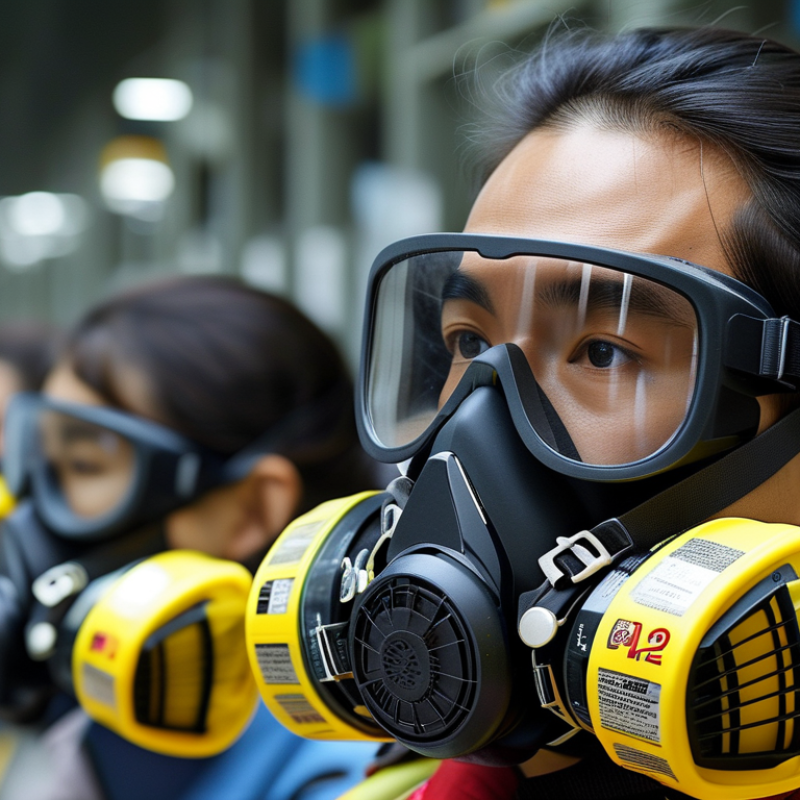
China Top 10 Protective Respirators Which Certified Standards?

What Defines a Protective Respirator in China?

In China, a protective respirator is defined by the hazard it controls, not by its appearance. A cup-shaped mask is not automatically protective. The product should identify its intended use, filtration class, test method, and applicable Chinese standard.

For industrial particulate protection, GB 2626 is a key reference. It evaluates filtration performance, breathing resistance, exhalation leakage, and practical durability. The familiar KN classifications relate to non-oily particles. A certificate alone is not enough. Inspectors should compare the certificate, product label, test report, and packaging details. Small mismatches can reveal serious quality problems.

Medical protective respirators follow different requirements, commonly associated with GB 19083. Gas and vapor hazards may require equipment covered by GB 2890, rather than a particle filter. Fit matters greatly. A high-performing filter cannot protect a user if air leaks around the nose or cheeks. Facial shape, movement, sweat, and poor adjustment all affect results. In real workplace checks, straps and nose seals deserve close attention. Some product descriptions still use vague language. That weakness should be questioned, not ignored. Certification systems and regulatory requirements may also vary by product category and intended market, so current official records should be verified before purchase.

China Top 10 Protective Respirators: Which Standards Apply?

Minimum filtration thresholds published in selected Chinese respirator and mask standards. GB 2626-2019 defines KN and KP particulate-filtering classes, while other standards apply to medical or children's masks and use different test metrics.

Note: Particulate filtration efficiency and bacterial filtration efficiency are different test measures and should not be treated as interchangeable. Product compliance also depends on fit, breathing resistance, labeling, testing, and the applicable standard.

China’s Top 10 Protective Respirators by Use and Design

China’s top ten protective respirators are better compared by use and design, not by price. The main categories include disposable particulate respirators, reusable half masks, full-face respirators, powered air-purifying respirators, supplied-air systems, escape respirators, welding respirators, spray-painting respirators, medical protective respirators, and emergency-response models.

Each design answers a different exposure problem. Disposable models suit short tasks with dust or non-oily particles. Reusable half masks offer longer service with replaceable filters. Full-face models also protect the eyes. Powered systems reduce breathing resistance, which matters during long shifts. Supplied-air respirators support oxygen-deficient or highly contaminated areas, but only under trained supervision. Welding and spraying models need carefully matched filters, not generic cartridges.

China’s GB 2626-2019 standard covers many respiratory protective products against particulate matter. Medical protective respirators follow GB 19083-2023, while chemical protection is commonly assessed under GB 2890-2022. The International Labour Organization reported 2.93 million work-related deaths in 2019, showing why fit and maintenance deserve equal attention. WHO’s 2021 air-quality guidelines also set stricter particulate limits than many workplace rules.

Certification is not a magic shield. A tested respirator can still fail with facial hair, poor fitting, expired filters, or damaged straps. That uncomfortable detail is often ignored. Selection should combine the hazard assessment, assigned protection factor, fit testing, breathing resistance, and real work duration. In practice, the “top” model is the one workers can correctly wear, inspect, and replace without hesitation.

China Top 10 Protective Respirators Which Certified Standards? - China’s Top 10 Protective Respirators by Use and Design

Rank Respirator Type Primary Use Typical Design and Protection Relevant Certification Standards Important Limitations
1 Filtering Facepiece Respirator Dust, mist, smoke and airborne particles in construction, manufacturing and general industry. Disposable, tight-fitting mask made from filtering material; common classes include FFP1, FFP2, FFP3 and N95-equivalent categories. GB 2626-2019; EN 149:2001+A1:2009; NIOSH 42 CFR Part 84; AS/NZS 1716:2012. Does not protect against oxygen deficiency, most gases or vapors; requires a suitable face seal.
2 Medical Protective Respirator Healthcare environments where protection from infectious aerosols, blood and body-fluid splashes is required. Tight-fitting particulate mask with high filtration efficiency and specified resistance to synthetic blood penetration. GB 19083-2010; selected products may also be assessed against EN 149 or NIOSH 42 CFR Part 84, depending on the claimed market. Not designed for oxygen-deficient atmospheres or unidentified chemical vapors; fit testing remains important.
3 Reusable Half-Mask Respirator Painting, chemical handling, metal processing and maintenance work. Reusable facepiece covering the nose and mouth; accepts replaceable particulate filters, gas filters or combined cartridges. GB/T 2890-2022; EN 140:1998; particulate filters under EN 143:2021; gas and combined filters under EN 14387:2021. Leaves the eyes exposed and cannot be used in oxygen-deficient or immediately dangerous atmospheres unless specifically approved for that application.
4 Full-Face Respirator Operations involving irritating gases, organic vapors, fine particles or splash hazards. Reusable facepiece covering the entire face, combining respiratory protection with eye and facial protection. EN 136:1998; filter performance under EN 143:2021 and EN 14387:2021; national approval requirements apply in China. Requires correct lens, seal and cartridge selection; not automatically suitable for oxygen-deficient environments.
5 Powered Air-Purifying Respirator Long-duration work with dust, fumes, aerosols or selected gases and vapors. Battery-powered blower draws contaminated air through filters and supplies filtered air to a hood, helmet or facepiece. EN 12941:1998+A2:2008 for powered filtering devices with hoods or helmets; EN 12942:1998+A2:2008 for devices with masks. Depends on battery power and filter capacity; not suitable for every immediately dangerous or oxygen-deficient atmosphere.
6 Gas and Vapor Respirator Solvent handling, spray coating, laboratory work and chemical processing. Uses activated-carbon or other chemically specific cartridges to adsorb selected gases and vapors; may include particulate prefilters. EN 14387:2021; EN 143:2021 for particulate filters; GB/T 2890-2022 for relevant non-powered air-purifying respirator requirements. Cartridges are substance-specific and have finite service lives; odor must not be used as the only replacement indicator.
7 Supplied-Air Respirator Extended work in contaminated areas where filtered ambient air is insufficient or breathing resistance must be reduced. Receives breathable air from a remote compressor or cylinder through a hose; available with hoods, helmets or facepieces. EN 14593-1:2018 and EN 14593-2:2005 for compressed-air line apparatus; EN 14594:2018 for continuous-flow compressed-air apparatus. Air quality, pressure, hose integrity and flow must be controlled; hose mobility can restrict movement.
8 Self-Contained Breathing Apparatus Firefighting, rescue, emergency response and unknown or immediately dangerous atmospheres. Carries an independent compressed-air supply and normally uses a full face mask with a positive-pressure breathing system. EN 137:2006; NIOSH 42 CFR Part 84 for approved self-contained breathing apparatus in the United States; applicable Chinese fire and safety approvals may also be required. Limited service duration; requires trained users, cylinder management and emergency procedures.
9 Welding and Fume Respirator Arc welding, thermal cutting, brazing and metal fabrication. High-efficiency particulate filtration, often integrated with a welding helmet or face shield; selected processes may also require gas and vapor filtration. EN 149:2001+A1:2009 for filtering facepieces; EN 143:2021 for particulate filters; EN 12941 or EN 12942 for powered designs. Does not remove all welding gases; ventilation and process-specific hazard assessment are still required.
10 Escape Respirator Emergency evacuation from areas affected by smoke, toxic gases or industrial chemical releases. Designed for short-duration escape only; may use a hood with a filter or an independent oxygen or compressed-air supply. EN 403:2004 for escape hoods with a hood for escape from fires; EN 13794:2002 for closed-circuit escape apparatus; product-specific national approvals apply. Not intended for routine work or rescue operations; duration, chemical coverage and oxygen conditions must match the emergency plan.

Note: Certification requirements depend on the product configuration, intended market, hazard assessment and applicable Chinese regulatory approvals. A respirator filter standard does not by itself confirm suitability for every chemical, concentration or oxygen level.

Key Chinese and International Certification Standards

China’s top ten protective respirators

China’s top ten protective respirators should be judged by certification, not appearance. Under GB 2626-2019, KN95 respirators require at least 95% filtration efficiency against test particles. KP-rated products also address certain oil-based particles.

The Chinese standard requires tests for breathing resistance, leakage, exhalation valves, and material quality. Fit matters greatly.

International standards add useful comparison. NIOSH criteria define N95 respirators at a minimum 95% filtration efficiency, based on approved laboratory testing. EN 149 classifies filtering half masks as FFP1, FFP2, or FFP3, with minimum filtration levels of 80%, 94%, and 99%.

80%
FFP1
94%
FFP2
99%
FFP3

These figures come from published NIOSH requirements and the European harmonised standard EN 149:2001+A1:2009. They are not interchangeable labels. A KN95 marking does not automatically prove NIOSH approval or European conformity.

Buyers should check the certificate number, test report, production model, and issuing authority.

China’s national conformity system and overseas approval databases can expose mismatched documents.

A practical inspection includes strap tension, nose-clip recovery, clear printing, and stable breathing during movement.

Small details matter.

Certification is not a guarantee of real-world protection. Poor facial fit can reduce performance sharply, as occupational health guidance repeatedly warns.

Some reports also focus heavily on filtration, while offering less evidence about long-term comfort and worker compliance. That gap deserves reflection when comparing China’s top ten respirators.

How to Compare Protection Levels, Fit, and Comfort

Comparing protective respirators starts with certification, but certification alone does not guarantee workplace protection. China’s GB 2626, the US NIOSH 42 CFR Part 84, and Europe’s EN 149 use different testing systems. Check the exact certificate, model, filter class, and intended use. NIOSH’s Certified Equipment List confirms approval status, while OSHA 29 CFR 1910.134 assigns an assigned protection factor of 10 to half-mask air-purifying respirators and 50 to full-face models.

Fit matters more than appearance. A respirator should seal around the nose, cheeks, and chin without visible gaps. OSHA requires fit testing before use and at least annually thereafter. Workers should repeat the test after major facial changes, dental work, or changing respirator models. A quick user seal check helps, but it does not replace a formal fit test. Facial hair can interfere with the sealing surface. This is often underestimated.

Comfort affects real wearing time. Measure breathing resistance, heat buildup, pressure points, speech clarity, and compatibility with glasses or hearing protection. NIOSH evaluations commonly examine these human factors because discomfort can encourage adjustment or removal. A lighter respirator may feel better, yet its filter capacity and seal still need verification. I would record discomfort after a full shift, not after five minutes. That approach is less convenient, but more honest. OSHA and NIOSH guidance remain useful reference points when comparing protection levels, fit, and comfort.

Selecting the Right Certified Respirator for Different Hazards

Selecting a respirator begins with identifying the hazard, not comparing package designs. China’s common protective respirators follow standards such as GB 2626-2019 for particulate filtration and GB 2890 for chemical cartridge respirators. KN-rated models target non-oily particles, while KP-rated models address certain oily aerosols. Their certification should match the product type and intended use.

Dust from cutting concrete needs particulate protection. Solvent vapors require suitable gas or vapor cartridges. Oxygen-deficient spaces require supplied-air equipment, not ordinary filtering respirators.

A certified mask cannot remove every hazard. This distinction is easy to overlook. In real workplaces, workers may also face heat, poor visibility, facial hair, or long shifts. These factors can weaken the seal and reduce practical protection.

Tips: Read the certification mark and inspection information carefully. Conduct a user seal check every time you wear the respirator. Replace damaged, dirty, or saturated filters promptly. For cartridge models, follow the manufacturer’s replacement schedule and keep records. Fit testing is valuable, especially when several models appear comfortable. Comfort alone proves little. A cautious selection based on measured exposure, facial fit, and work duration is more reliable than choosing by filtration percentage alone.

FAQS

: What defines a protective respirator?

: Its controlled hazard, filtration class, test method, and applicable standard define it. Shape alone proves little.

Is a certificate enough when buying a respirator?

No. Compare the certificate, product label, test report, and packaging details. Small mismatches matter.

Which respirator suits concrete dust?

Use a certified particulate respirator designed for non-oily particles. Check its class and intended use carefully.

Can a particle respirator protect against solvent vapors?

No. Solvent vapors require suitable gas or vapor cartridges. A particle filter cannot remove every hazard.

How should users check the fit?

The respirator should seal around the nose, cheeks, and chin without visible gaps. Perform a user seal check every time.

Does a seal check replace formal fit testing?

No. Formal fit testing gives stronger evidence of protection. Repeat it after facial changes or switching models.

Can facial hair reduce protection?

Yes. Hair near the sealing surface can create leaks. This problem is easy to underestimate.

What makes a respirator comfortable during long work?

Check breathing resistance, heat, pressure points, speech clarity, and glasses compatibility. Test comfort after a full shift, not five minutes.

When should filters or cartridges be replaced?

Replace damaged, dirty, or saturated filters promptly. Follow the replacement schedule and keep simple records.

What should be used in oxygen-deficient spaces?

Use supplied-air equipment designed for that hazard. Ordinary filtering respirators are not suitable. Be cautious here.

Conclusion

This guide explains what defines a protective respirator in China and reviews ten common types according to their use and design, including disposable particle-filtering respirators, reusable half-mask and full-face respirators, powered air-purifying systems, supplied-air respirators, and specialized options for gases, vapors, dust, and aerosols. It also answers the question, “What are the certified standards for protective respirators,” by introducing key Chinese requirements such as GB 2626 and GB 2890, together with relevant international frameworks including NIOSH and EN standards.

The article further shows how to compare respirators by filtration performance, face fit, seal quality, breathing resistance, wearing comfort, service life, and compatibility with other protective equipment. By matching certified protection levels to hazards such as fine particles, chemical vapors, biological aerosols, or oxygen-deficient environments, readers can make safer and more practical selections while understanding the importance of correct fitting, inspection, maintenance, and replacement.

Amelia

Amelia

Amelia is a seasoned marketing professional with a wealth of expertise in our company’s core offerings. With an unwavering passion for driving growth and innovation, she plays a pivotal role in shaping our marketing strategies and enhancing brand visibility. A key aspect of her responsibilities......